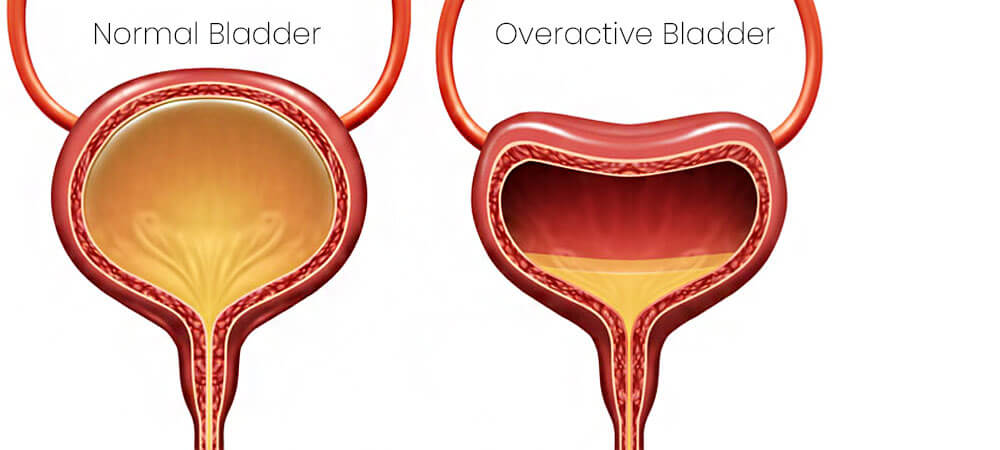
Overactive Bladder
Overactive Bladder (OAB) is a condition characterized by a sudden, uncontrollable urge
to urinate, often accompanied by increased frequency and nighttime urination.
It can significantly affect daily activities and quality of life.
Early diagnosis and appropriate treatment help regain bladder control.
What Is Overactive Bladder?
Overactive bladder occurs when the bladder muscles contract involuntarily,
even when the bladder is not full. This leads to urgency, frequent urination,
and sometimes involuntary urine leakage.
Common Symptoms:
- Sudden and strong urge to urinate
- Frequent urination during day and night
- Urgency-related urine leakage
- Nocturia (waking at night to urinate)
- Difficulty postponing urination
Causes of Overactive Bladder:
-
Overactive bladder muscles: Involuntary contractions cause urgency.
This is the primary cause of OAB.
-
Neurological disorders: Stroke, Parkinson’s disease, or spinal injury affect bladder nerves.
This leads to poor bladder control.
-
Urinary tract infections: Infections irritate the bladder lining.
This can trigger urgency and frequency.
-
Bladder outlet obstruction: Conditions like prostate enlargement restrict urine flow.
This worsens bladder function.
-
Age-related changes: Aging weakens bladder control mechanisms.
Increases the risk of OAB.
Prevention & Lifestyle Management:
- Limit caffeine, alcohol, and spicy foods
- Practice bladder training techniques
- Perform pelvic floor (Kegel) exercises regularly
- Maintain a healthy body weight
- Manage diabetes and neurological conditions effectively
Treatments for Overactive Bladder:
-
Behavioral therapy: Bladder training helps increase bladder capacity.
Improves control over urgency.
-
Medications: Medicines relax bladder muscles and reduce urgency.
Effective for moderate to severe symptoms.
-
Pelvic floor therapy: Strengthens muscles supporting bladder function.
Reduces urgency and leakage.
-
Botox injections: Injected into bladder muscles to reduce involuntary contractions.
Provides long-lasting symptom relief.
-
Nerve stimulation therapy: Modulates bladder nerve signals.
Used when medications are ineffective.
-
Surgical treatment: Reserved for severe, treatment-resistant cases.
Aims to improve bladder capacity and control.