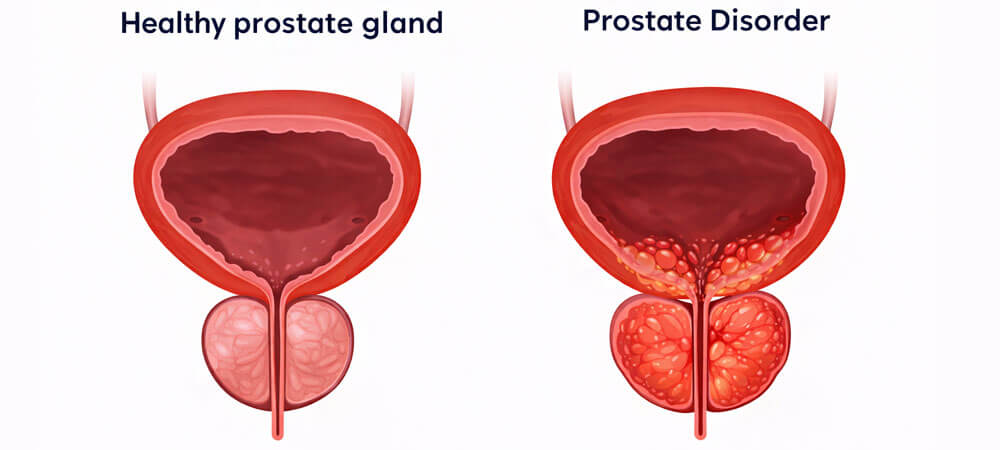
Prostate Disorders (BPH)
Benign Prostatic Hyperplasia (BPH) is a non-cancerous enlargement of the prostate gland,
commonly affecting men above 50 years of age. As the prostate enlarges, it can press
against the urethra and bladder, leading to troublesome urinary symptoms. Early diagnosis
and appropriate treatment help relieve symptoms and prevent complications.
What Is Benign Prostatic Hyperplasia (BPH)?
BPH occurs when the prostate gland gradually increases in size with age.
Though not cancerous, an enlarged prostate can obstruct urine flow,
causing discomfort and affecting quality of life.
Common Symptoms:
- Frequent urge to urinate, especially at night
- Weak or interrupted urine stream
- Difficulty starting urination
- Feeling of incomplete bladder emptying
- Dribbling of urine after finishing
- Urgency or sudden need to urinate
Causes of Prostate Enlargement (BPH):
-
Age-related hormonal changes: Testosterone and estrogen imbalance causes prostate growth.
This is the most common reason for BPH.
-
Ageing: Prostate enlargement is rarely seen in younger men.
Risk increases significantly after the age of 50.
-
Family history: Genetic factors may increase the risk of developing BPH.
Men with affected relatives are more prone.
-
Obesity and sedentary lifestyle: Excess weight affects hormone balance.
This increases the chances of prostate enlargement.
-
Diabetes and heart disease: These conditions are associated with higher BPH risk.
Poor metabolic health affects prostate function.
Prevention & Lifestyle Management:
- Maintain a healthy weight and stay physically active
- Limit caffeine and alcohol intake
- Avoid holding urine for long periods
- Eat a balanced diet rich in fruits and vegetables
- Get regular prostate check-ups after 50 years
Treatments for Prostate Disorders (BPH):
-
Medical treatment: Medicines relax prostate muscles and reduce gland size.
Suitable for mild to moderate symptoms.
-
Lifestyle modification: Fluid management and bladder training improve symptoms.
Often combined with medications.
-
Minimally invasive procedures: Advanced techniques remove or reduce prostate tissue.
These provide faster recovery with minimal discomfort.
-
TURP (Transurethral Resection of Prostate): Gold-standard surgical treatment for BPH.
Excess prostate tissue is removed via the urinary passage.
-
Laser prostate surgery: Uses laser energy to remove enlarged prostate tissue.
Results in less bleeding and quicker recovery.
Important Links
Best Kidney stone Treatment in Shivaji Park
Best Female urinary incontinence in Shivaji Park
Best Urology Surgeon in Dadar
Best Urologist in Dadar
Best Urinary Incontinence Treatment in Dadar
Best Urinary Tract Infection Treatment Doctor Shivaji Park